Class 9 Science — Chapter 3: Tissues in Action
A living body is built from cells that work together. In plants and animals, groups of specialised cells share tasks such as growth, protection, transport, movement and coordination. Learning how a tissue is built helps explain what it can do.
1. Cells and Tissues
1.1 What Is a Tissue?
Multicellular organisms have different levels of organisation. Cells form tissues. Tissues combine to make organs. Organs work together to form organ systems. Organ systems make up the whole organism.
This sharing of jobs is called division of labour. It helps different body parts to perform their tasks efficiently. Some complex tissues, such as phloem, have more than one kind of cell working together.
1.2 Why Plant and Animal Tissues Differ
Most plants stay in one place. So, they need strong tissues that support them.
Animals usually move from place to place. Their tissues help them move and respond to changes.
Plant cells have stiff walls. Animal cells do not have these walls, so they can change shape more easily.
2. Plant Growth and Differentiation
2.1 Plant Growth
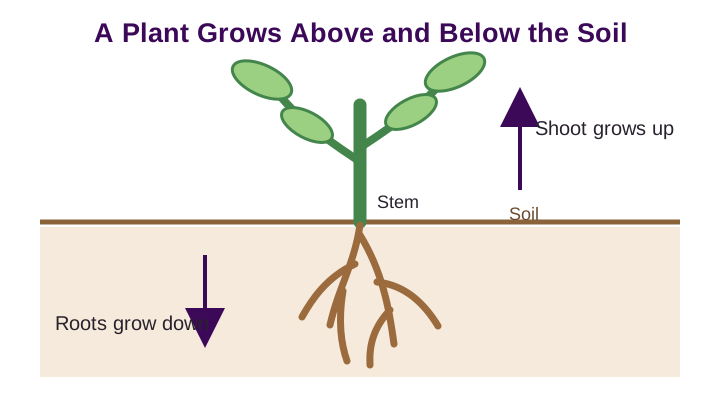
A root is the part of a plant that usually grows into the soil. Roots take in water and minerals.
A shoot includes the stem and leaves. It usually grows above the soil.
Roots and shoots can grow longer. Some stems also grow thicker over time.
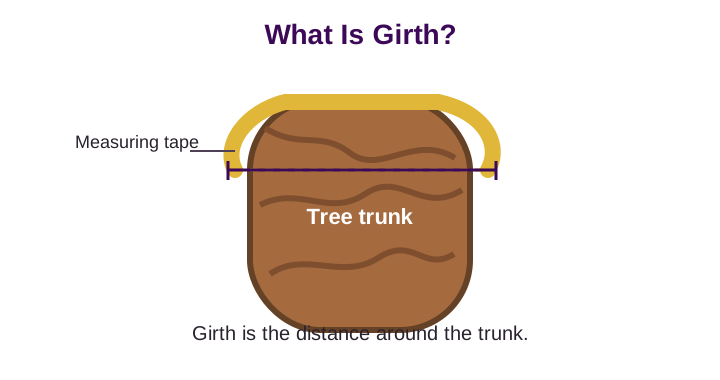
Look at a cut tree trunk. You may see ring-like patterns inside it. These are called annual growth rings.
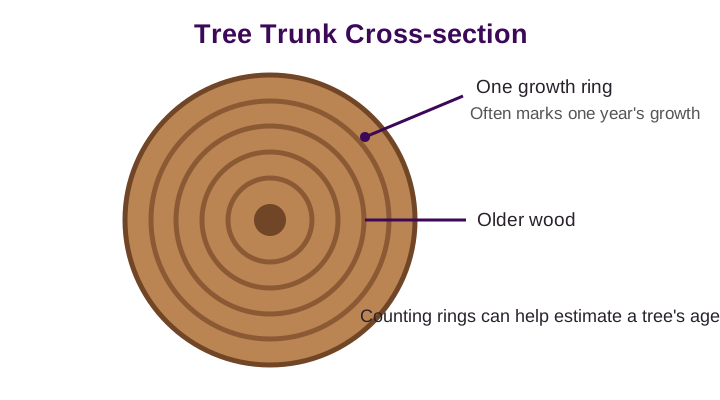
A tree adds new wood as it grows. In many trees, the wood formed in one year looks different from the wood formed in the next year. This makes ring-like patterns.
Each pattern often marks about one year of growth. That is why these patterns are called annual growth rings. Count the rings to help estimate the tree’s age. Wider or narrower rings can also show how good the growing conditions were in a certain year.
2.2 Meristematic Tissue
Meristematic cells are small. They are closely packed together. Their cell walls are thin. Their cytoplasm (the jelly-like material inside a cell) is dense. They have a large nucleus. They usually do not have a large vacuole. These features help them divide again and again.
Some new cells stay meristematic. Other new cells grow and become specialised.
2.3 Types of Meristems
Plants have three main types of meristems:
- Apical meristems
- Lateral meristems
- Intercalary meristems
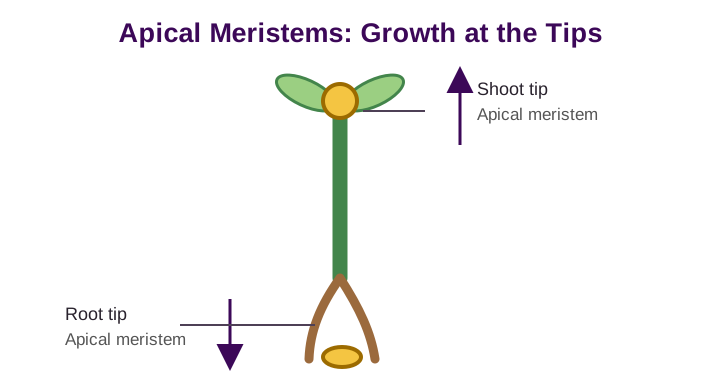
2.3.1 Apical Meristem
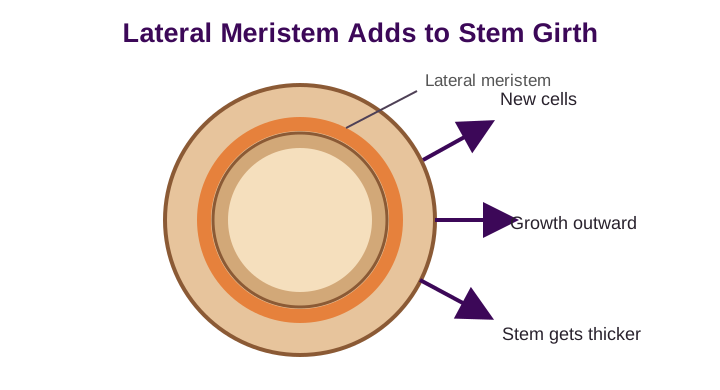
2.3.2 Lateral Meristem
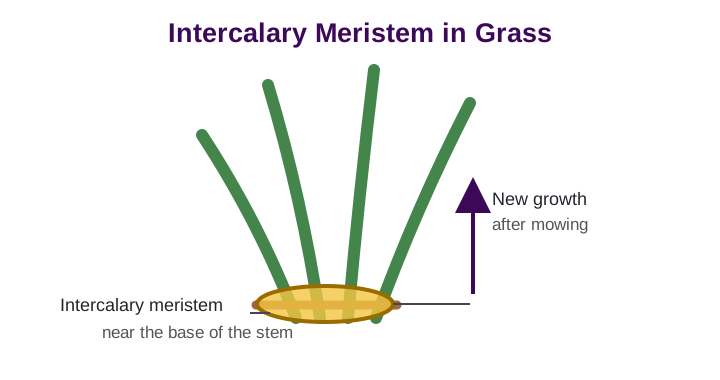
2.3.3 Intercalary Meristem
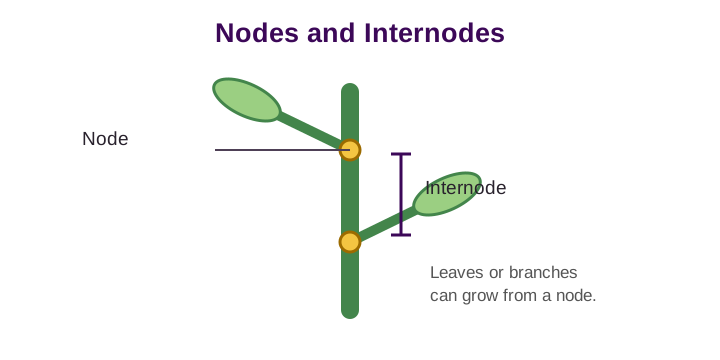
Apical, lateral and intercalary meristems therefore support growth in length, thickness and regrowth. Cutting a shoot tip can stop its lengthening at that point, while buds at nodes may develop into branches.
2.4 Permanent Tissues and Differentiation
A simple permanent tissue has one main kind of cell. A complex permanent tissue has different kinds of cells that work together. These tissues protect, support, store or move materials.
2.5 Totipotency and Plant Tissue Culture
In plant tissue culture, scientists grow cells in a clean dish. They give the cells water and nutrients. They also provide the right conditions.
Some mature plant cells can start dividing again. They can then form new tissues and organs. This method helps scientists grow plants for research and farming. Scientists also use some bacteria to add useful genes to plants.
3. Plant Protective Tissue
3.1 Epidermis and Cuticle
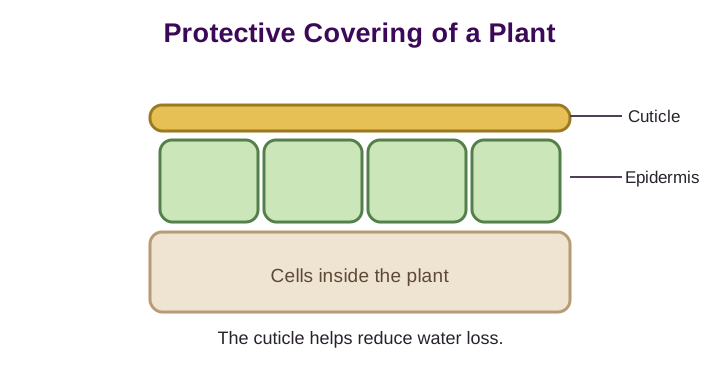
Epidermal cells are usually closely packed in a single layer. They form a protective layer over the plant. They help protect it from injury, water loss and some harmful organisms.
In roots, extensions of epidermal cells called root hairs increase the surface area that can absorb water and minerals from the soil.
The cuticle can be thick on plants that live in dry places. A very thick cuticle could make it harder for an underwater plant to exchange materials with the water.
3.2 Stomata and Transpiration
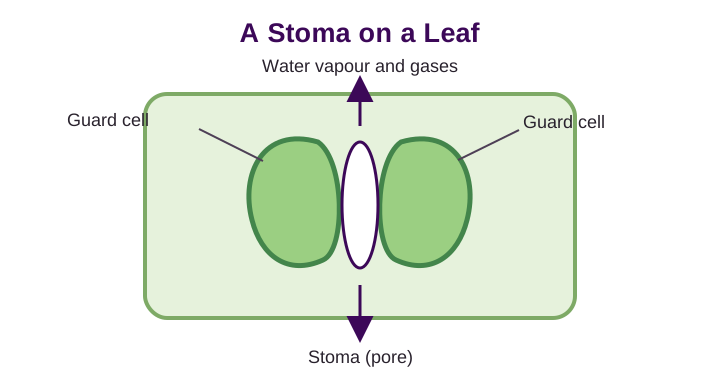
As water evaporates from leaves, it helps create a pull that draws water upward through xylem from the roots.
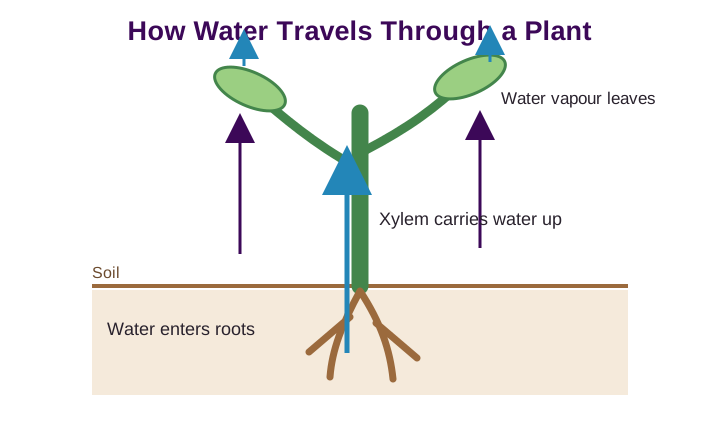
Transpiration can also cool the plant and help remove some waste. A plant must also avoid losing too much water.
4. Plant Supporting Tissues
Simple permanent tissues help plants store materials and remain upright while allowing the right amount of flexibility.
4.1 Parenchyma
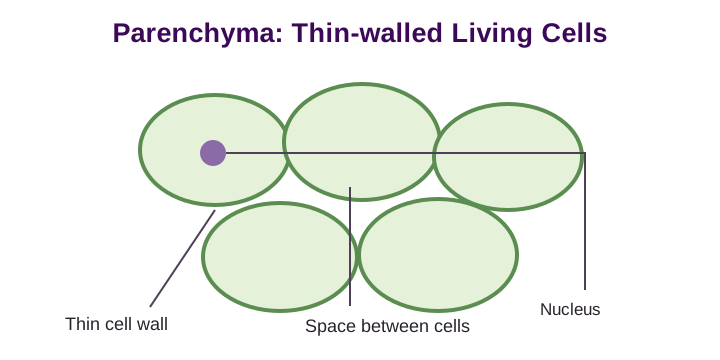
Parenchyma can store food and water. In green parts of a plant, it can also make food by photosynthesis. In many water plants, air spaces in parenchyma help the plant float.
4.2 Collenchyma
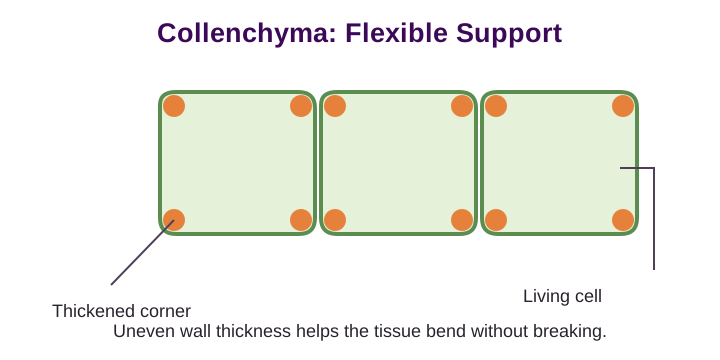
Collenchyma helps young stems, leaf stalks and tendrils stay flexible. A fresh twig can bend. A dry twig is more likely to snap.
4.3 Sclerenchyma
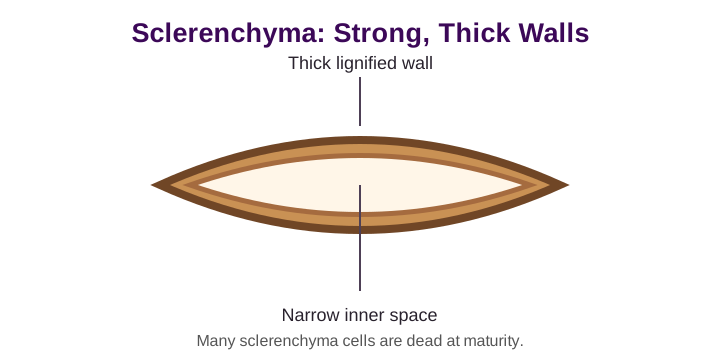
Sclerenchyma strengthens stems and leaf veins. It also forms hard coverings, such as coconut husk and walnut shell. It makes plant parts firm. Collenchyma gives more flexible support.
5. Plant Conducting Tissues
Plants have two main conducting tissues: xylem and phloem. Each tissue has different kinds of cells that work together.
5.1 Xylem
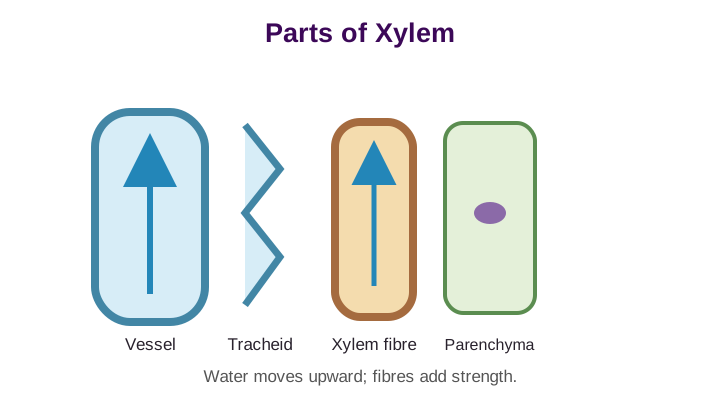
Xylem has four main parts: tracheids, vessels, xylem fibres and xylem parenchyma. Tracheids and vessels carry water. Most are hollow and dead when fully grown. Xylem fibres make the plant stronger. Xylem parenchyma is made of living cells and can store materials.
5.2 Phloem
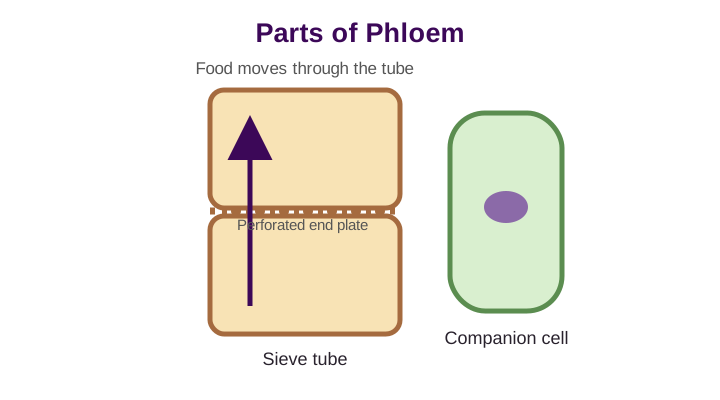
Phloem also has parenchyma cells that store materials. Phloem fibres give the plant strength. Most phloem cells are alive.
5.3 Plant Tissue Systems
Plant tissues work together in larger groups called plant tissue systems. There are three main systems:
- Dermal tissue system: This is the plant’s outer covering. It protects the parts inside and helps reduce water loss.
- Ground tissue system: This forms much of the plant body between the outer covering and the conducting tissues. It includes parenchyma, collenchyma and sclerenchyma.
- Vascular tissue system: This contains xylem and phloem. These tissues carry water, minerals and food through the plant.
The three systems work together to protect, support and supply the plant.
6. Animal Tissues
6.1 Epithelial Tissue
This tissue protects the body. It can also take in materials, release materials or allow them to pass through. Its shape depends on its job:
| Function | Typical structure | Example location |
|---|---|---|
| Exchange of gases or liquids | A thin, flat layer of cells | Air sacs in lungs; lining of blood vessels |
| Protection from rubbing and germs | Several layers of closely packed cells | Skin, mouth and food pipe |
| Release of substances | Cells that make and release materials | Sweat and salivary glands; stomach lining |
| Sensing | Special cells that detect changes | Nose, taste buds and inner ear |
| Taking in materials | A layer of tall cells, sometimes with tiny projections | Small intestine |
6.2 Connective Tissue
The matrix can be liquid, soft or hard. Blood has a liquid matrix. Bone has a hard matrix with minerals. Cartilage has a soft, flexible matrix.
- Plasma is the liquid part of blood. It carries blood cells and dissolved materials such as nutrients, hormones and wastes.
- Red blood cells (RBCs) contain haemoglobin, a protein that carries oxygen around the body.
- White blood cells (WBCs) help defend the body against infection.
- Platelets are small cell fragments that help blood clot at an injury.
Bone supports and protects the body. Cartilage is softer and more flexible. It cushions the ends of bones at some joints.
6.3 Muscular Tissue
Muscles make movement by becoming shorter and pulling. Our body has three main types of muscle:
| Muscle type | Structure | Control and role |
|---|---|---|
| Skeletal | Long fibres with stripes. Each fibre has many nuclei. | Usually under our control. It attaches to bones and moves the skeleton. |
| Smooth | Narrow cells with pointed ends. They have one nucleus and no stripes. | Works without our control. It moves food through organs such as the stomach and intestines. |
| Cardiac | Branching fibres with faint stripes. Most have one nucleus. | Works without our control. It contracts in a steady rhythm in the heart. |
6.4 Nervous Tissue
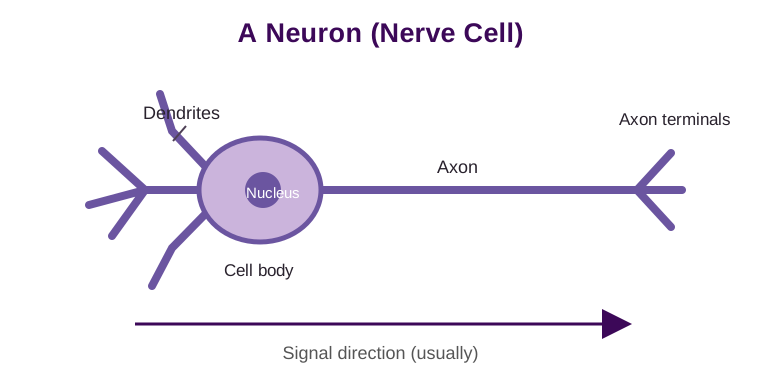
A neuron has a cell body and long branches. The cell body holds the nucleus. Dendrites receive messages. The axon carries messages away from the cell body.
7. Musculoskeletal and Skeletal Systems
7.1 Musculoskeletal System
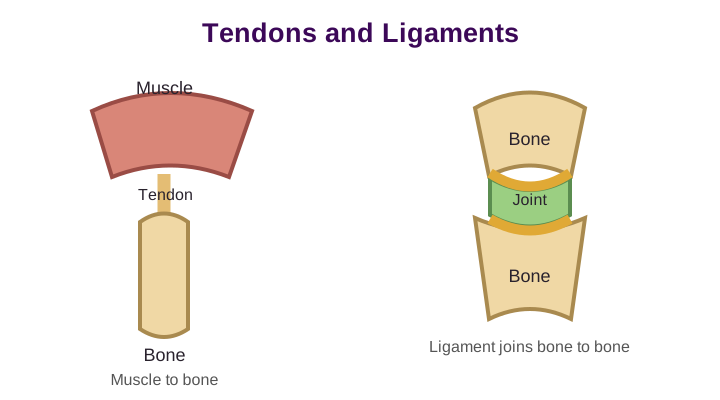
Muscles pull on bones through tendons. Bones meet at joints. Cartilage cushions some joints. Ligaments hold bones together. The nervous system helps control these actions.
Together, these parts help us move, stand upright and protect our organs.
7.2 Joints
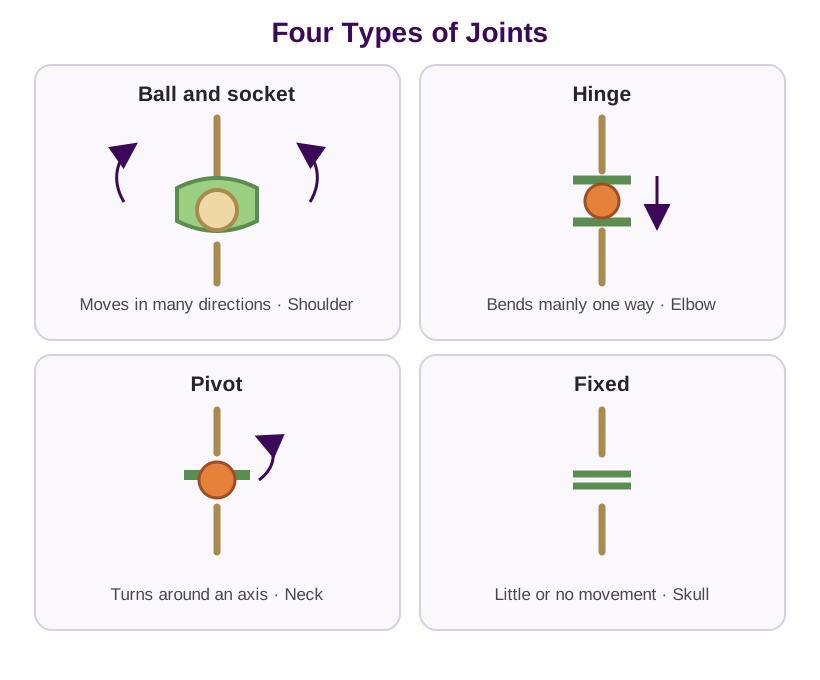
Joints differ in how much and in which directions they allow movement:
| Joint type | Movement | Example |
|---|---|---|
| Ball and socket | Moves in many directions | Shoulder |
| Hinge | Bends and straightens mainly one way | Elbow and knee |
| Pivot | Turns around a point | Joint between the skull and upper backbone |
| Fixed | Bones do not move | Joints between bones of the skull |
The shape of a joint guides how it can move. Muscles pull on the bones. The joint does not move the bones by itself.
7.3 Skeletal System
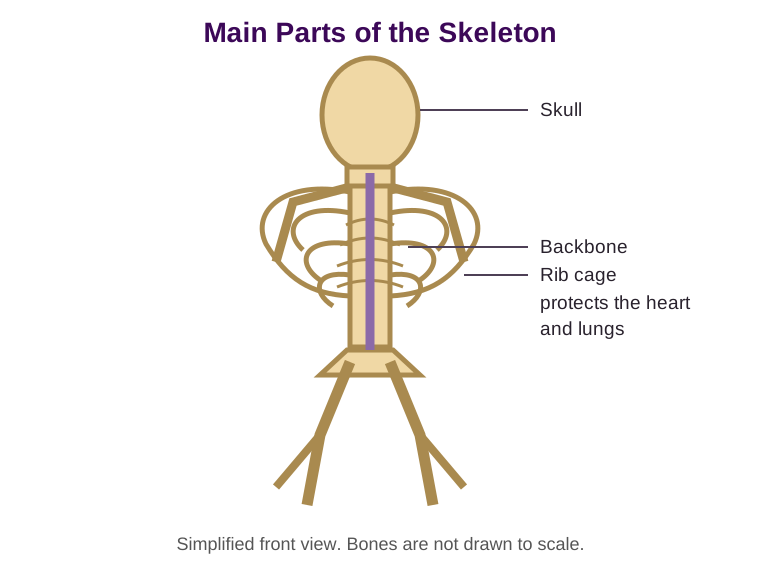
- The skull protects the brain. It also supports parts of the face.
- The vertebral column, or backbone, is made of small bones called vertebrae. It supports the body and protects the spinal cord. Cartilage discs between the vertebrae act as cushions. They help the back bend and twist.
- The rib cage has 12 pairs of ribs. The ribs attach to the backbone. At the front, cartilage joins most ribs to the sternum, or breastbone. The rib cage protects the heart and lungs. It also moves as we breathe.
Good posture, nutritious food and regular movement help support bone, muscle and joint health.
8. Chapter Summary
- Tissues are groups of cells that cooperate. Tissues form organs and organ systems, creating division of labour in multicellular organisms.
- Plant meristems make new cells: apical meristems lengthen roots and shoots, lateral meristems increase girth, and intercalary meristems support regrowth in some plants.
- Differentiation makes cells specialised. Mature plant cells form simple or complex permanent tissues; some plant cells can show totipotency under suitable culture conditions.
- The epidermis and cuticle protect plants. Stomata allow gas exchange and water-vapour loss; transpiration helps draw water through xylem.
- Parenchyma stores materials and may photosynthesise; collenchyma gives flexible support; sclerenchyma gives strength.
- Xylem moves water and minerals and adds support. Phloem moves food. Together they form the vascular tissue system alongside the dermal and ground systems.
- Animal epithelial tissue covers and lines surfaces. Connective tissue supports and connects; blood, bone, cartilage, tendons and ligaments are examples.
- Skeletal, smooth and cardiac muscles produce different kinds of movement. Nervous tissue coordinates responses through neurons.
- The musculoskeletal system combines bones, muscles, joints and connective tissues. The skeletal system supports the body and protects organs.